
Your practice, with a staff behind it.
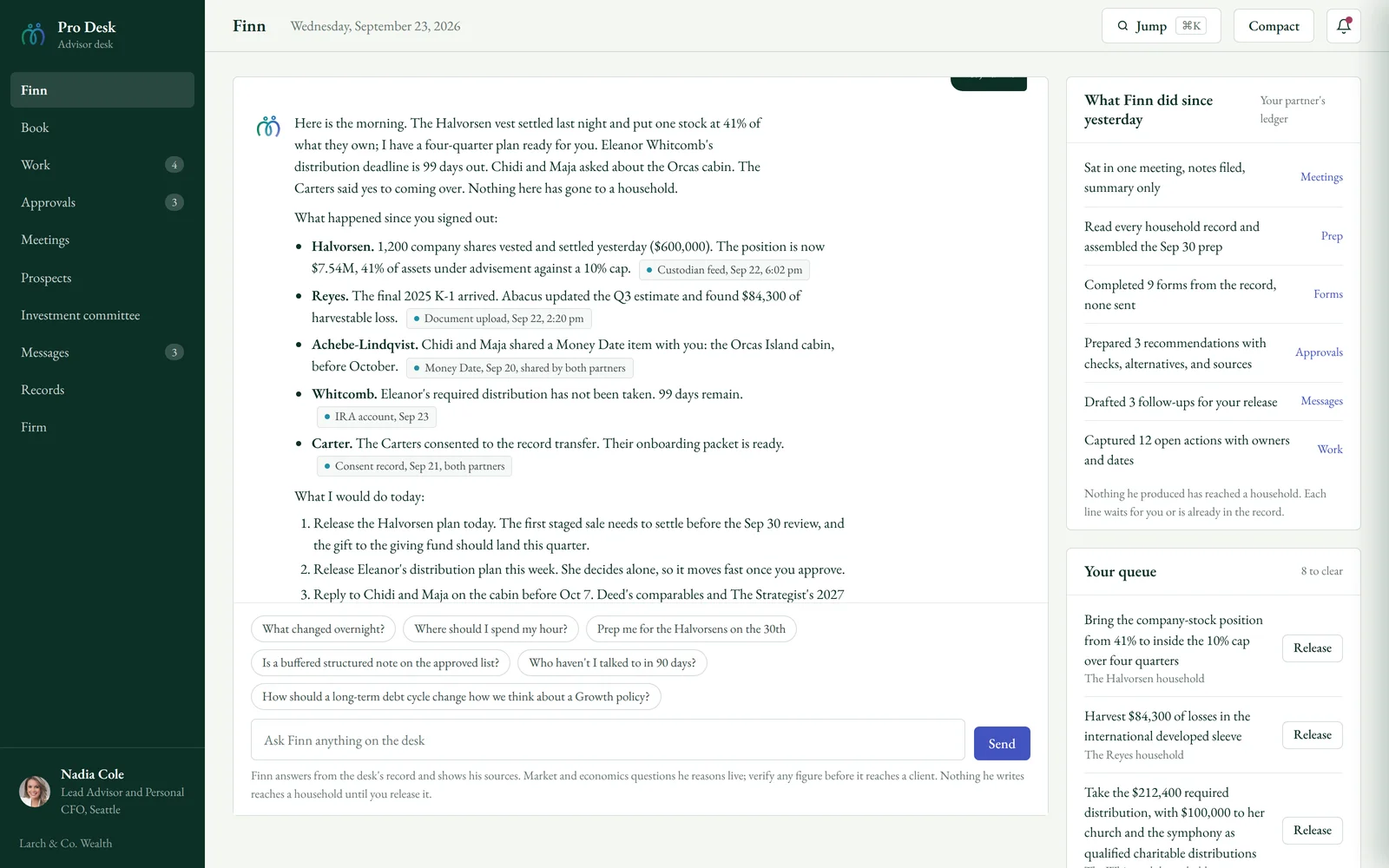
Finn and the staff do the prep, the notes, the forms and the follow-ups. You decide, you release, you see the client. Households arrive with their numbers already in the room, and nothing you write reaches one until you say so.
The advisor desk, 6:00 am. Every household and pro shown is fictional.
Advisor desk
The staff prepares. The advisor decides.
- 20%
- of an advisor's week is spent in client meetings. Prep and follow-up take more.
- 70%
- of heirs leave their parents' advisor after inheriting, with $124 trillion moving by 2048.
- 100,000
- advisors short of demand by 2034 as retirements outpace new hires.
- Reads every household record overnight and assembles the prep for each review.
- Sits in meetings, files the notes, and captures every open action with an owner and a date.
- Completes forms from the record. Drafts the follow-ups. Prepares each recommendation with checks, alternatives and sources.
- Keeps both generations in the room, so the handoff to the heirs happens on your desk.
- Nothing it produces reaches a household until you release it.
Coaching desk
The week between sessions, carried with real numbers.
- $10,644
- less debt for coached clients in a randomized trial, and $1,187 more savings at a second site.
- 2
- sessions: the median a client attended. Fewer than 6 in 10 offered coaching came to the first.
- 66 days
- median for a new daily behavior to become automatic. The change happens between sessions.
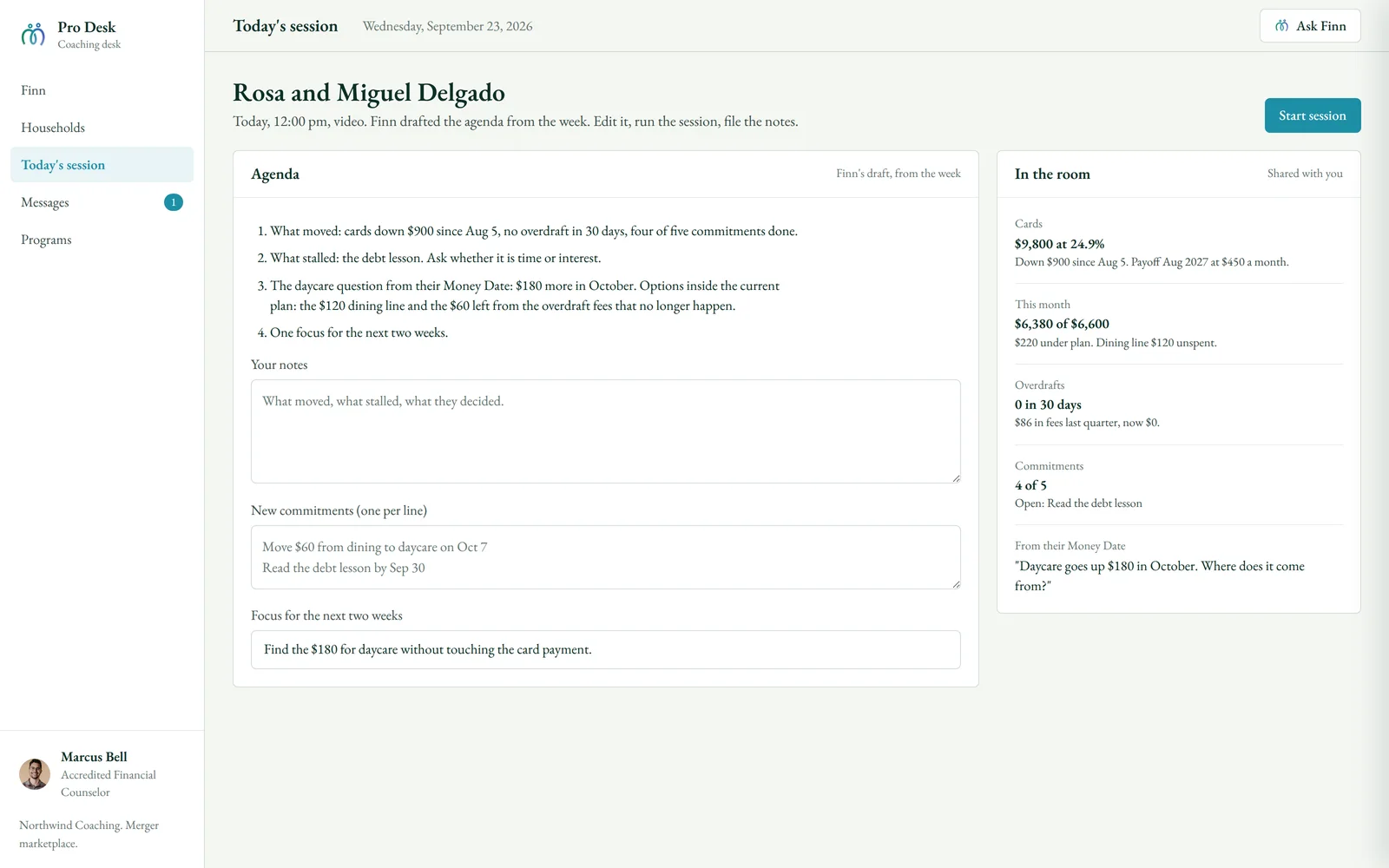
- Finn drafts each agenda from the household's week: what moved, what stalled, what they decided.
- The numbers the household shares sit in the room with you: cards, the month, overdrafts, commitments.
- Commitments you set are tracked by the staff between sessions. You see what held.
- Questions from the household's Money Date come to your desk, so sessions start where the couple already is.
Therapy desk
Every couple measured weekly, shared with consent.
- No. 1
- Money arguments predicted divorce more than any other common disagreement across 4,574 couples.
- 6 years
- the average couple waits before seeking help for the relationship.
- 13.9%
- of clinicians track progress with standardized measures monthly. 61.5% never do.
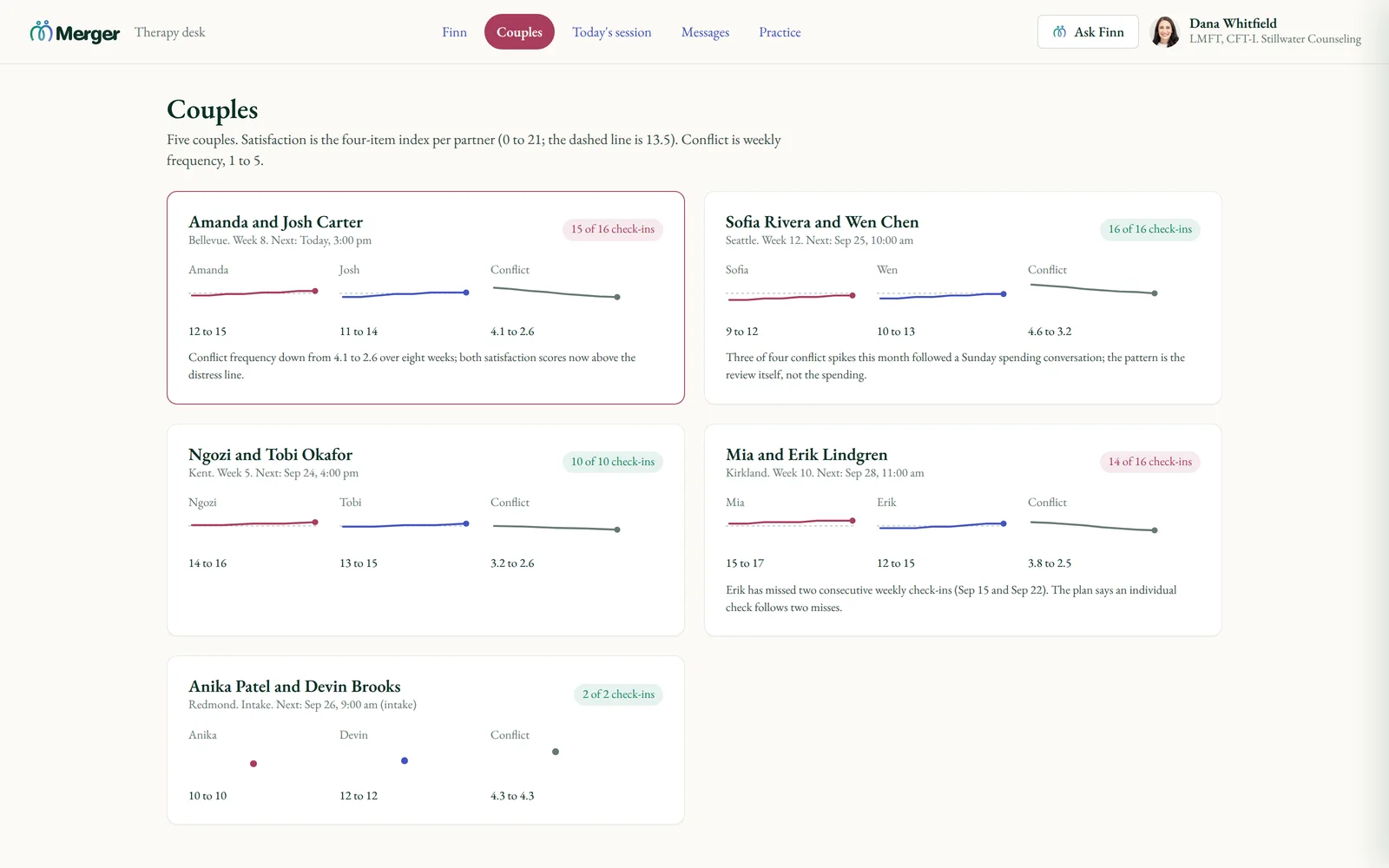
- A four-item satisfaction index per partner and a weekly conflict frequency, charted for every couple on your desk.
- Finn flags the pattern before the session, never a diagnosis.
- The couple holds the consent: what you see, what you don't, and the Money Date items they choose to share.
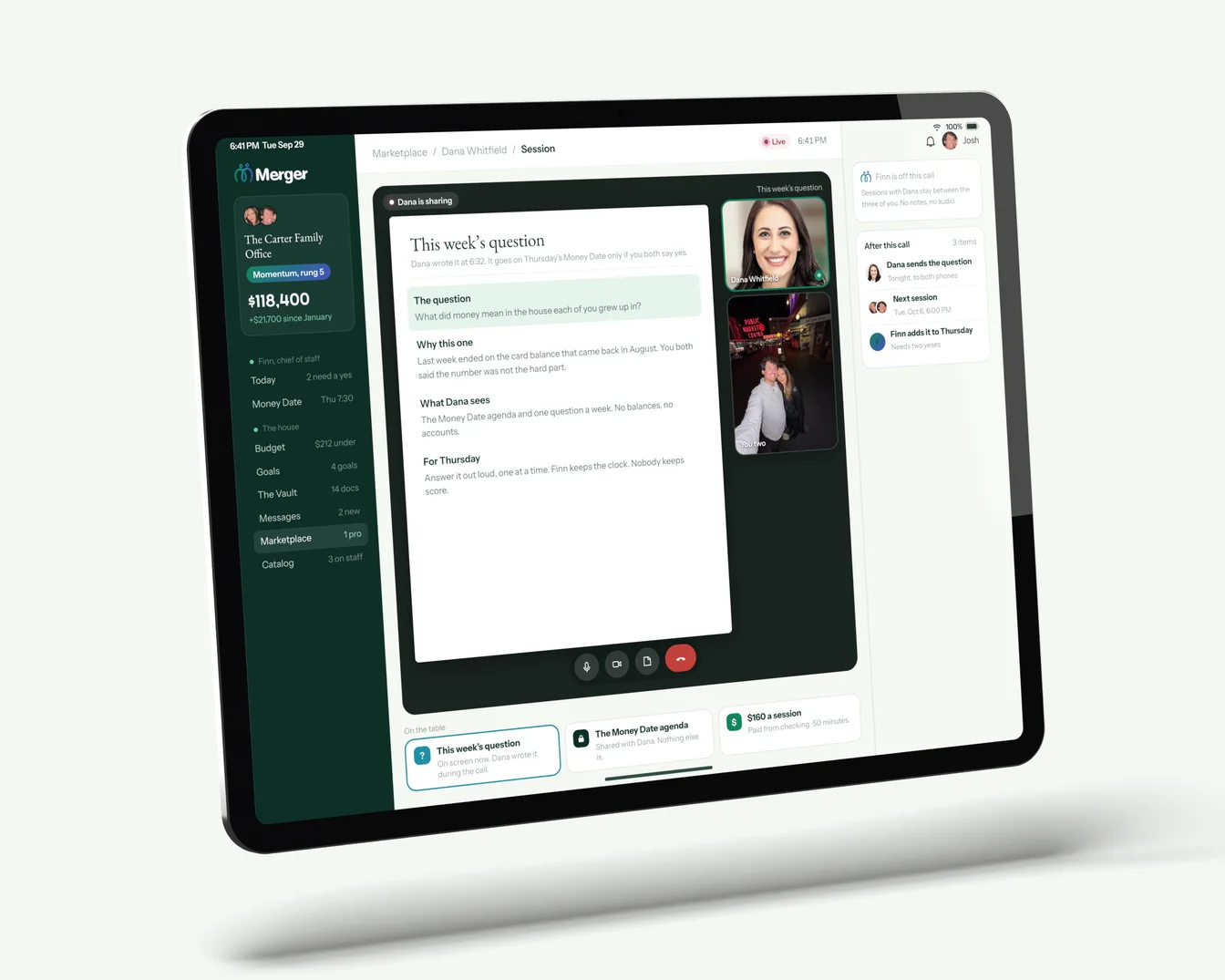
- Sessions run on video inside Merger. Finn is off the call. No notes, no audio.
How households find you
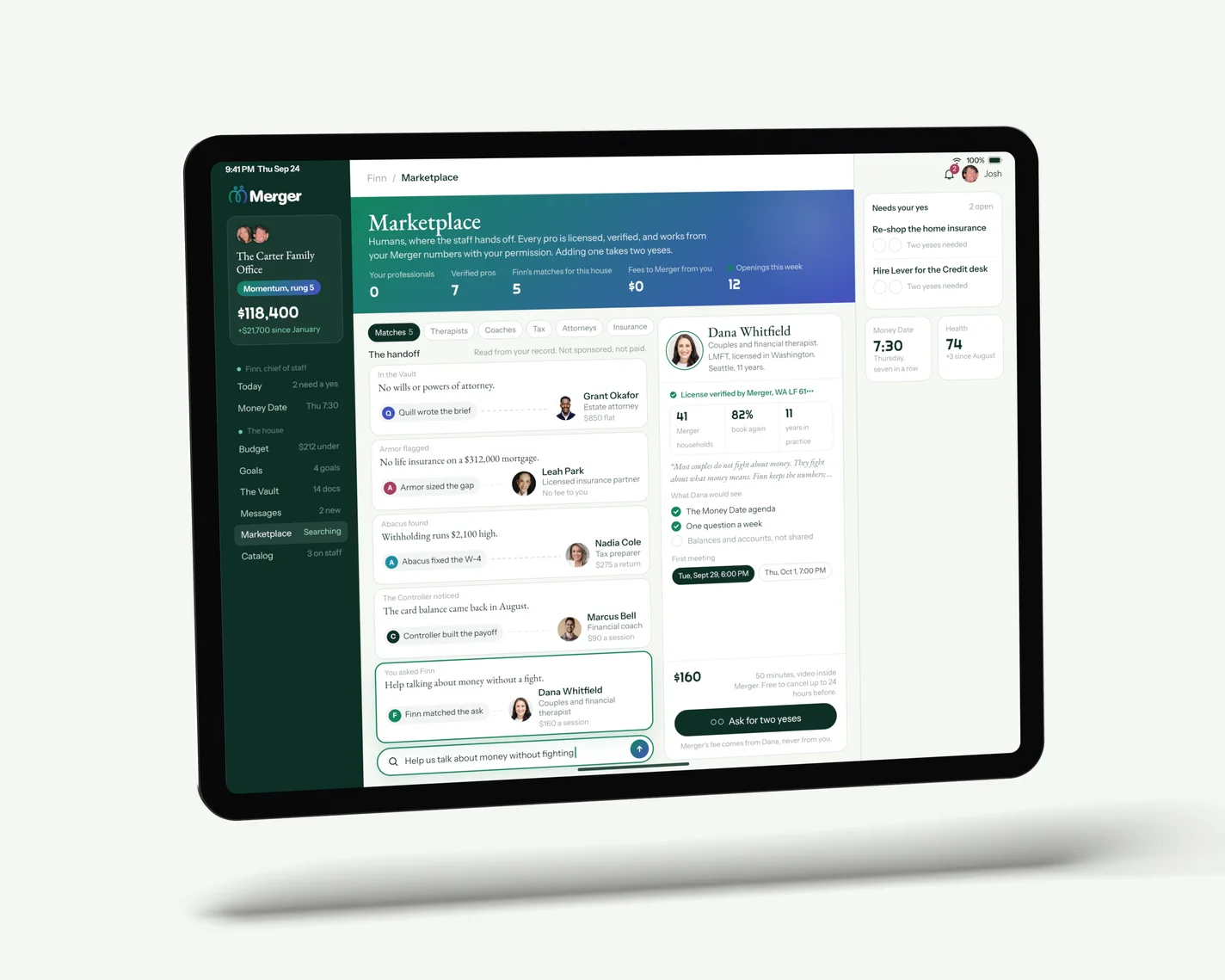
Finn matches the gap to the pro. Two yeses add you to the house.
Every match is read from the household’s record, never sponsored, never paid. Your license is verified before you are listed. The household sees your price and your next opening before they book, and both partners say yes. Merger’s fee comes from you, never from the household, so the house pays nothing to add you.
The seat
One seat a year. Your own clients ride free.
A seat is your listing, your desk and the staff behind it. Households you bring buy their Merger plan at list and you pay nothing on them. Households Finn sends you carry a share of the session fee, never a charge to the house.
On households Finn sends you
- Coaches20% of a single session, 15% of a package of five or more.
- TherapistsA per-session service fee for booking, billing and records, set with you before you list.
- Clients you bringNothing. They buy their Merger plan at list price.
Seats bill annually or quarterly, and quarterly costs about 10% more. A firm support seat is $300 a year. Coach and therapist desks are open now. The advisor desk opens with registration.
Apply
Apply to be listed.
Every pro on the desk is licensed and reviewed before listing. A person reads every application. Tell us who you are and which desk you want, and we will write back.
Product captures are from the Pro Desk demonstration. Every household and professional shown is fictional.